From Derrick Comedy to Mystery Team: How an Online Sketch Group Made a Feature Film
A feature film can look like a natural next step for a successful online comedy group, but the move changes nearly everything about the work. A sketch can establish a premise and leave before its limitations become visible. A film must sustain a story, develop characters, manage a production team, and survive a distribution process. Mystery Team, the 2009 debut feature associated with Derrick Comedy, offers an unusually clear example of that transition. It began with collaborators who had made short comedy videos and took them into a project built around three young men who refuse to outgrow the detective games of childhood. What makes the production interesting is not simply that the creators had an online audience. It is how they tried to bring their own comic instincts into a much longer format while learning the practical demands of independent cinema.
The historical record is unusually useful here. Director Dan Eckman wrote about the project for Filmmaker around its Sundance premiere. DC Pierson later discussed the group’s origins and production challenges with MovieMaker. A contemporary Roadside Attractions announcement describes the distribution agreement and the film’s production. Those accounts illuminate decisions and circumstances, but none of them should be mistaken for the original text of the movie’s promotional website. This is a retrospective analysis based on identifiable sources, not a recovered 2009 article.
A comedy group before the feature
Derrick Comedy’s roots were in collaboration, rather than a studio setting. In a 2012 interview with MovieMaker, Pierson recalled the overlap between student sketch groups, live performance, and work that eventually became videos. The team included Donald Glover, Dominic Dierkes, Pierson, Eckman, and producer Meggie McFadden. Their online presence grew in an era when video distribution was becoming accessible to people without established television or film distribution. A viewer could encounter a clip through a website or another person sharing it, rather than a broadcast schedule.
That history matters because it helps explain the creative culture the filmmakers carried into Mystery Team. They had practice developing unusual premises and making a limited idea immediately legible. They also had experience collaborating outside the hierarchy of a large production. None of that guaranteed that an independent feature would be easy. Instead, it provided a distinctive starting point: a group that understood its own humor and had evidence that people wanted to see it, but still needed to prove it could sustain a feature-length narrative.
An audience is not the same as a film
Online popularity can answer one question: does anybody respond to this group’s material? It cannot answer all the questions a feature presents. A film requires a sequence of scenes whose stakes change over time. Characters cannot merely repeat their signature joke. In his January 2009 Sundance essay, Eckman emphasized that the creators did not view online success as a formula they needed to imitate forever. His account presents the internet as a means of reaching viewers while the group’s primary interest remained writing and shooting material they found funny.
That distinction is central to the project’s identity. A commercially minded producer might try to reproduce a collection of popular internet shorts in one package. Mystery Team instead takes a single premise and develops it as a crime-comedy narrative. The result may still contain the absurdity associated with short-form sketch writing, but it has to offer a reason to remain with its characters. This is the creative difference between transferring a following and transferring a form. The filmmakers attempted the first without simply treating the second as already solved.
Why the child-detective premise could carry a story
Jason, Duncan, and Charlie were once admired for solving small neighborhood mysteries. As the film begins, their detective identity has become an obstacle to adulthood. The community has moved on, while the trio continues to behave as though a child’s social status is still worth defending. An encounter with a serious crime places their self-image under pressure. The Roadside Attractions announcement reproduced by GeekTyrant makes the clash between their childish specialties and the threatening adult setting explicit.
That contrast gives the film more room than a standalone gag about incompetent detectives. Every new environment can expose a different limit in the team’s confidence. The characters’ friendship supplies continuity even when a sequence becomes deliberately ridiculous. A serious mystery provides forward movement, while the protagonists remain emotionally attached to the simpler rules of their childhood. This combination lets the movie revisit its central joke without requiring every scene to be a copy of the previous one.
Building a production outside the normal pipeline
The contemporaneous distribution announcement says that the film was independently produced and shot over seven weeks in Manchester, New Hampshire, in summer 2008. That is a concrete production detail, not a reason to romanticize every part of independent filmmaking. A schedule of several weeks still requires locations, personnel, continuity, camera work, sound, coordination, and a plan for completing scenes. The finished feature carries the consequences of those choices, even when its comic style appears loose.
Pierson’s later MovieMaker interview is especially useful because it resists the simpler story that an online following made the transition effortless. He describes the difficulties of authority and coordination within a production crew. The team could know precisely what kind of comedy it wanted and still confront ordinary filmmaking constraints. A sensible account of Mystery Team therefore recognizes both things: unusual access to a preexisting audience and the demanding work of making a movie from start to finish.
The division of creative work
The film is not adequately described as one performer’s project. Dan Eckman directed and edited it; Meggie McFadden produced it; Donald Glover, DC Pierson, and Dominic Dierkes wrote the screenplay and played the central trio. The contemporaneous acquisition release names a broader story collaboration. Crediting these different roles matters because a creative group’s public profile can obscure the labor behind production. The film’s comic voice belonged to a group, but filmmaking still required responsibilities to be assigned.
For historical restoration work, these credits are more reliable than a later promotional retelling that reduces the movie to a single celebrity’s early appearance. The central performers went on to varied careers, yet those later trajectories should not rewrite the 2008–2009 production story. At the time, Mystery Team was a collective attempt to make a feature with an identifiable team and a specific comic sensibility.
Sundance provided a screening, not an automatic sale
Mystery Team premiered at the 2009 Sundance Film Festival. Eckman’s first-person festival entry identifies its premiere screening for January 17 at the Library Center Theatre in Park City. A festival selection can provide attention and a place to show a film to viewers, but it is not the same thing as securing a release. Pierson’s recollection in MovieMaker describes a distribution process in which additional screenings helped demonstrate demand.
This distinction makes the chronology more accurate. The film was not simply uploaded by internet comedians and then immediately released to an established audience. A theatrical release required a distributor and plans for reaching theaters. The May 2009 acquisition announcement by Roadside Attractions marks a different milestone from the January festival premiere. Keeping those dates separate avoids giving readers a misleading impression of how swiftly a small production reached the wider market.
Roadside Attractions and the promotional identity
On May 18, 2009, Roadside Attractions announced that it had acquired U.S. rights to the film. The announcement discussed a planned college tour and later theatrical activity; it also pointed viewers to the film’s domain to watch a teaser. That reference is particularly important to the present website because it independently documents what the original domain was for: promoting Mystery Team, not serving as an unrelated entertainment publication.
A separate FirstShowing article from July 20, 2009 linked the same domain while reporting on the theatrical trailer. Together these references give a grounded explanation for the site’s historically important homepage backlinks. They do not establish the internal structure of the site’s lost HTML, and they certainly do not prove that a modern article slug existed in 2009. The appropriate recovery priority is therefore the movie identity and original homepage URL before speculative internal pages.
What a theatrical feature changes about online comedy
Short videos invite rapid experimentation. Their audiences may arrive at different times, watch out of order, and encounter only one sketch. A film makes a larger promise: a complete experience with an opening, development, and resolution. Mystery Team adapts that promise through a central friendship and a murder investigation. Comedy still arrives from misunderstandings and bad judgment, but the viewer also has a practical question to follow: whether the trio can solve a case far beyond its abilities.
This does not mean the film abandoned sketch sensibilities or became a conventional detective drama. The tension between those modes is the point. It may help explain why reactions were divided: viewers seeking a polished mystery and viewers drawn to deliberately uncomfortable absurdity may evaluate the same scenes differently. A useful retrospective can recognize both without suggesting either audience is wrong. Its importance as an example lies partly in the risk of keeping a distinctive style when entering a different format.
Reception belongs in the history, not in a sales pitch
Contemporaneous responses varied. Popdose published an enthusiastic DVD review on May 25, 2010, emphasizing the performers’ commitment and the theme of friendship. Other accounts were less enthusiastic, and individual reviews should not be represented as a consensus. The film’s documented theatrical scale was limited: The Numbers reports a domestic total of $89,442 and a limited release beginning August 28, 2009. That figure records theatrical receipts in its dataset; it does not reveal the complete economics of the production or measure all later viewers.
The more defensible conclusion is narrower and more interesting. An internet comedy team made a feature, reached Sundance, secured U.S. distribution, and saw its film enter theaters and home video. Those are verifiable stages. Claims that the film transformed an industry, achieved a particular profit, or guaranteed career success would require stronger evidence than the available sources provide.
What should remain on a restored website
The story itself is compelling enough without invented archival detail. Derrick Comedy moved from online sketches to a feature while retaining the same collaborators and comic interests. Their film gained a festival premiere, a distributor, and a path to audiences. The strongest editorial approach is to explain that history carefully, state what remains unverified about the original site, and let the evidence carry the account.
Sources and further reading
- Dan Eckman on Mystery Team, Filmmaker, January 17, 2009
- DC Pierson interview, MovieMaker, April 19, 2012
- Roadside Attractions acquisition announcement, reproduced by GeekTyrant, May 2009
- Theatrical trailer announcement, FirstShowing, July 20, 2009
- Mystery Team box-office and release information, The Numbers
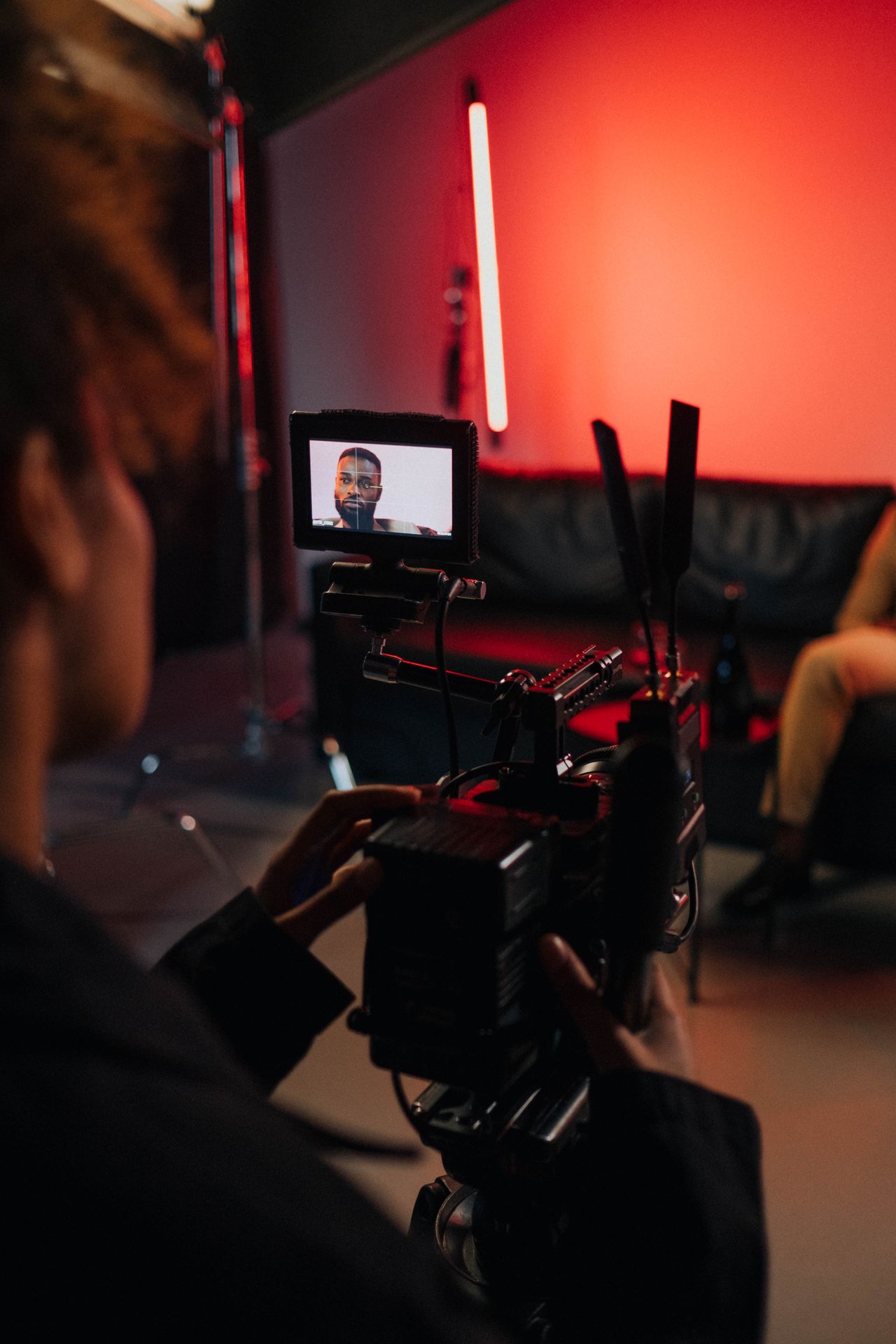
Featured image: illustrative stock photography by Ron Lach / Pexels (photo source) · Pexels License. Not an original Mystery Team production photograph.